Skip to Main Content (Press Enter)

Logo UNIBS
  • ×
  • Home
  • People
  • Organizations
  • Expertise & Skills
  • Outputs
  • Jobs
  • Degrees
  • Courses
  • Third Mission

Expertise & Skills
Logo UNIBS

|

Expertise & Skills

unibs.it
  • ×
  • Home
  • People
  • Organizations
  • Expertise & Skills
  • Outputs
  • Jobs
  • Degrees
  • Courses
  • Third Mission
  1. People
Person
CARE' Algo

CARE' Algo

Docenti di ruolo di IIa fascia
Department of Information Engineering
Course Catalogue:
https://unibs.coursecatalogue.cineca.it/docente-ma...

Gruppo 09/IINF-04 - AUTOMATICA

Settore IINF-04/A - Automatica
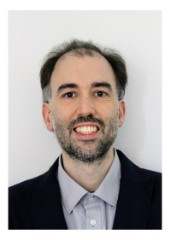
Algo Carè has years of research experience in randomised methods for optimisation and data-driven optimisation. His expertise includes statistical learning and probability theory at large. He holds degrees in Computer Science and Control Systems. Almost all of his research interests are related to the fundamental generalisation issue, that is, to the question about when and how it is possible to get reliable information on an indefinitely large set of possible situations (experiments, input-output data, scenarios, etc.) based on a finite sample of them. Since the beginning of his research activity he has been intensively collaborating with two of the leading contributors to the theory of Scenario Approach, Professor Marco C. Campi (University of Brescia, Italy) and Professor Simone Garatti (Politecnico di Milano, Italy). In the Scenario Approach, one aims at finding a good solution to an optimisation problem with an infinite amount of constraints based on a finite number of them. His main contributions to the Scenario Approach are new algorithms that exploit dimension reduction and sparsity to optimise high dimensional uncertain problems in a provably reliable way; a theorem on invariant properties of data-based solutions to min-max problems; an extension of the Scenario Approach to the somewhat classic but theoretically challenging setting of least squares estimation methods. He also contributed on applications of the Scenario Approach, ranging from water management systems to power systems. The problem of learning in a reliable way from experimental data is also at the core of Dr Carè’s contributions to machine learning, which are focused on the classification problem and its applications in medicine (ventricular fibrillation in particular). Dr. Carè's research in system identification aim at evaluating the uncertainties in the models of dynamical systems that are built from a finite sample of input-output signals. In particular, his work is focused on finite-sample methods such as LSCR (Leave-out Sign-dominant Correlation Regions), SPS (Sign-Perturbed Sums) and the recently introduced SPCR (Sign-Perturbed Correlation Regions).
  • Contact
  •  algo.care@unibs.it
  •  Webpage
  • Alerts
  • Cv
  • Research
  • Affiliations
  • Outputs
  • Prizes And Scientific Assignments
  • Office Hours
  • Useful Resources

Communications

Curriculum Vitae

Dr. Algo Carè is currently an Associate Professor with the Department of Information Engineering, University of Brescia. He received the PhD degree in informatics and automation engineering from the University of Brescia, Brescia, Italy, in 2013. He spent two years at The University of Melbourne, Melbourne, VIC, Australia, as a Research Fellow in system identification with the Department of Electrical and Electronic Engineering. Dr. Carè was a recipient of a two-year ERCIM Fellowship in 2016 that he spent at the Institute for Computer Science and Control (SZTAKI), Hungarian Academy of Sciences (MTA), Budapest, Hungary, and at the Multiscale Dynamics Group, National Research Institute for Mathematics and Computer Science (CWI), Amsterdam, The Netherlands. He received the triennial Stochastic Programming Student Paper Prize by the Stochastic Programming Society for the period 2013–2016. His current research interests include data-driven decision methods, system identification, and learning theory

Fields (3)


PE1_13 - Probability - (2016)

PE1_19 - Control theory and optimisation - (2016)

PE7_1 - Control engineering - (2016)

Free text keywords (3)

SCENARIO APPROACH
STATISTICAL LEARNING THEORY
SYSTEM IDENTIFICATION
No Results Found

Research fields (4)

Data-driven decision-making and control - A common problem in control systems engineering, operations research, finance, etc., is that of minimizing a cost function that depends on an uncertain parameter. A widespread heuristic to cope with this problem is that of making a decision based on a set of collected observations of the uncertain parameter. These observations are called “scenarios”. Recent theoretical developments have shown that, in some relevant contexts, scenario-based decisions have interesting generalization properties (probabilistic robustness, chance-constrained feasibility). In particular, it is possible to keep under control the probabilities that the uncertain parameter carries a cost beyond some suitably constructed thresholds. These probabilities are called “coverage probabilities”. In the cases studied, the coverage probabilities can be characterized in depth, without resorting to new observed data and without assuming any knowledge of the probability distribution of the uncertain parameter.
Finite-sample system identification - System Identification has been defined as the "art and science of building mathematical models of dynamical systems using observed data". In this context, model parameters are estimated from data, and a crucial step is quantifying the uncertainty on the estimated values by building informative confidence regions around them. Confidence regions are often obtained by resorting to asymptotic results, which can be very deceiving in the engineering and industrial practice, where of course only a limited amount of data is available. This project focuses on recently proposed methods that allow one to build valid (that is, guaranteed with exact probability) confidence regions, with a limited amount of data and under mild assumptions on the system noise.
The research focuses on devising and analysing methods that can integrate physical knowledge of the space weather dynamics with information carried by the large amount of data available from solar images, in situ data provided by satellites, and measurements of the magnetic conditions on the earth.
This project targets the automatic classification of ECGs of patients in a condition of ventricular fibrillation. Classification algorithms with strong statistical guarantees (guarantees on the probability of correct classification, on sensitivity and specificity) are studied and designed. In particular, the main focus is on self-testing algorithms that produce valid statistical guarantees by using only the data that are available in the training set, i.e., for which no separate test or validation set is necessary.
No Results Found

Collaborates with

Identificazione e Controllo
Group

Publications (47)

  • ascendant
  • decrescent
  • All
  • All
  • Open
  • Partially Open
  • Mixed
  • Embargoed
  • Reserved

Awards and honors (2)

IEEE Control Systems Society "Roberto Tempo" Best CDC Paper Award, conferred by IEEE Control Systems Society - 2025
Stochastic Programming Student Paper Prize, conferred by Committee on Stochastic Programming (COSP) della Stochastic Programming Society - 2016
No Results Found

Office Hours

Video

Useful Resources

  • Support
  • Privacy
  • Use of cookies
  • Legal notes

Powered by VIVO | Designed by Cineca | 26.3.5.1